





You've heard the stories. A black cat crosses your path and suddenly you're bracing for a week of bad luck. Funny in concept, maybe. But the consequences are real: black cats are among the last to be adopted in shelters, whether because they get overlooked or because centuries-old superstitions still quietly shape people's decisions. That cost is measurable and ongoing.
For nearly every dark legend about black cats, there's another culture, sometimes right next door, that celebrates them as bringers of luck, love, and prosperity. Same cat. Opposite story. When two
myths cancel each other out, what remains is a cat. So let's go through five of the most persistent black cat myths, weigh each one against the evidence, and leave the fear where it belongs (in the trash heap of history).
Where These Myths Actually Came From
The history matters, because understanding the origin of a myth is the first step toward letting it go.
In ancient Egypt, cats were revered as sacred animals, associated with the goddess Bastet, who represented home, fertility, and protection. The intentional harming of a cat carried serious penalties, and when a cat passed of natural causes, the human family would shave their eyebrows in mourning. Cats were mummified and prepared for the afterworld, often with mummified mice to accompany them. That reverence shows up across Egyptian art and burial practice for thousands of years.
That reverence didn't survive everywhere. In parts of the world where cats had been worshipped, particularly in pagan cultures, their hallowed status became tainted as the persecution of non-Christians intensified. By the Middle Ages in Europe, cats were associated with cults and declared unholy. The tipping point came in 1233, when Pope Gregory IX issued a papal document called Vox in Rama, condemning an alleged heretical sect in Germany. The text described initiation rituals supposedly involving a black cat, and while it was aimed at one accused group rather than cats broadly, the damage was done. For the first time, the black cat had been put in writing, by the highest authority in Europe, as a companion of evil. That image spread, hardened, and outlived its author by centuries.
Then came the witch hunts. Women who practiced healing arts or lived outside societal norms were accused of witchcraft, and black cats were named their so-called “familiars,” believed to be spies or shape-shifted witches prowling in darkness. Millions of cats were sentenced to death and burned in witch trials or thrown into bonfires. Cat guardians who tried to protect their companions risked facing inquisition themselves. The fear compounded, the myths hardened, and here we are centuries later still carrying the weight of them.
So let's break them.
Myth 1: A Black Cat Crossing Your Path Curses Your Day
This one has the longest history and probably the most staying power. The idea is that a black cat, simply by walking past you, can hex a total stranger's morning. The association between black cats and misfortune was built on fear, not on anything real. Their nocturnal nature, independence, ability to disappear into shadow, and the mysterious reputation cats have long carried only fueled those fears.
The flip side: in much of the UK, a black cat crossing your path is considered a sign of good luck, and in Japan, black cats have long been regarded as bringers of good fortune, even said to help attract worthy companions. So which is it? Doom on your Wednesday morning commute, or love and prosperity headed your way?
When the same cat means entirely opposite things depending on which side of an ocean you're standing on, you're looking at old, fear-driven storytelling that has long outlived any usefulness it might once have had. When two contradictory superstitions cancel each other out, what remains is the cat herself. And she has nothing to answer for.
Myth 2: Black Cats Are Witches' Familiars and Agents of the Devil
This is the myth the witch hunts gave us: the black cat as familiar, spy, shape-shifted witch, devil's sidekick. Because cats were associated with accused witches, they were persecuted alongside them and blamed for all manner of misfortune. The leap from “historically scapegoated” to “actually sinister” is a leap grounded in nothing real. It's cultural residue.
The flip side: in ancient Egypt, cats were celebrated as guardians of the home and symbols of divine protection. And in Scotland, the arrival of a black cat on your doorstep was considered a sign of prosperity coming to the household, while in Ireland, cats were so associated with good fortune that giving one as a gift was a tradition meant to bless a new home.
Protector. Guardian. Bringer of good things. That belief is every bit as old as the sinister one, and honestly, it's a lot closer to what anyone who has actually lived with a black cat will tell you.
Myth 3: Black Cats Are Bad for Your Health
Somewhere along the line, the superstition mutated into something that sounds almost medical: the idea that a black cat in your life means sickness, allergies, or worse. Science points in a very different direction, for both of you.
Your cat's health: Researchers have found that melanism, the genetic trait behind black fur, evolved independently multiple times across the cat family, from house cats to jaguars. When evolution keeps reinventing the same trait, that's a strong signal the trait carries real advantages. The mutations responsible sit in the same gene family involved in immune response, and scientists believe they may confer added resistance to certain diseases, in much the same way some genetic variants offer protection against specific pathogens. The coat that superstition called a curse may actually be a kind of genetic armor.
Your health: Cats purr at frequencies between roughly 25 and 150 Hertz, and research has linked frequencies in that range to bone healing, reduced inflammation, and tissue repair. Large-scale follow-up research has found that cat guardians showed meaningfully lower risk of death from cardiovascular disease compared with people who had never lived with a cat, with researchers pointing to stress relief as a likely contributing factor. The research on all of this is still developing, so nobody should treat a purr as a prescription. But “bad for your health”? The evidence points the
other way entirely. Your cat is a self-healing animal who curls up on your chest and runs what amounts to a therapy session at 25 Hertz. Let's retire this one for good.
Myth 4: You Can't Truly Bond With a Cat Whose Face You Can't Read
This one has a practical spin that makes it feel more reasonable than the supernatural myths, and I understand where it comes from. Dark fur can make it slightly harder to read facial expressions in low light, and people worry that translates into a shallower connection. But cat communication is a full-body conversation. You're reading ears, tail position, posture, vocalizations, and slow blinks as much as you're reading a face.
Learning to read your cat on those terms is part of building real mojo with them, and it applies to every cat regardless of coat color. If anything, black cats invite you to become a better, more attentive listener. Learning to read your cat that way is a masterclass in the kind of attention that deepens any relationship. That's a skill worth having.
Myth 5: Never Adopt a Black Cat Around Halloween
This is the myth that does its damage inside the shelter itself. For decades, the belief circulated that black cats adopted in October would be harmed in rituals, and many shelters responded by suspending black cat adoptions for the whole month. The intention was protective. The evidence never materialized. Animal welfare organizations that investigated found no data supporting a wave of ritual harm, and what the October adoption restrictions reliably accomplished was keeping black cats in cages longer during a season when they were finally getting public attention. Some shelters
have since chosen to spotlight black cats in the fall instead, recognizing that visibility can work in their favor
The flip side: if you want a superstition about a black cat entering your home, history offers a much better one. Scottish legend holds that a black cat arriving at your doorstep is a sign of prosperity on the way, and in Ireland, cats have long been associated with good fortune.
A black cat coming home with you, in October or any other month, is an arrival worth celebrating. What she brings through your door is a relationship, a living presence that asks you to pay attention, be consistent, and show up. That's exactly the kind of relationship that changes people, and it has been changing me since 1992.
Why This Matters in 2026
Superstition is just that: superstition. For nearly every belief that paints black cats as bad luck, another culture celebrates them as symbols of good fortune, and now science has joined the conversation on the cats' side. The myths cancel each other out. The cats remain.
The negative myths have had centuries to take root, and their effects are still measurable today. Research on animal shelter data has found that black cats, regardless of age or sex, take longer to be adopted compared with cats of other coat colors, and more recent work continues to show that black cats are consistently perceived as less adoptable. Every time an old superstition quietly
persuades someone to pass over a black cat, a real animal waits longer for a home.
Superstition and stigma still color the way people perceive cats more broadly, and that's exactly why conversations like this one matter. If you're ready to help change that, consider visiting your local shelter or rescue and asking to meet the black cats there. Then head to the blog to learn what it really takes to welcome a new feline companion into your home.
Light, Love, and Mojo,
Jackson
Sources
Jackson Galaxy sources
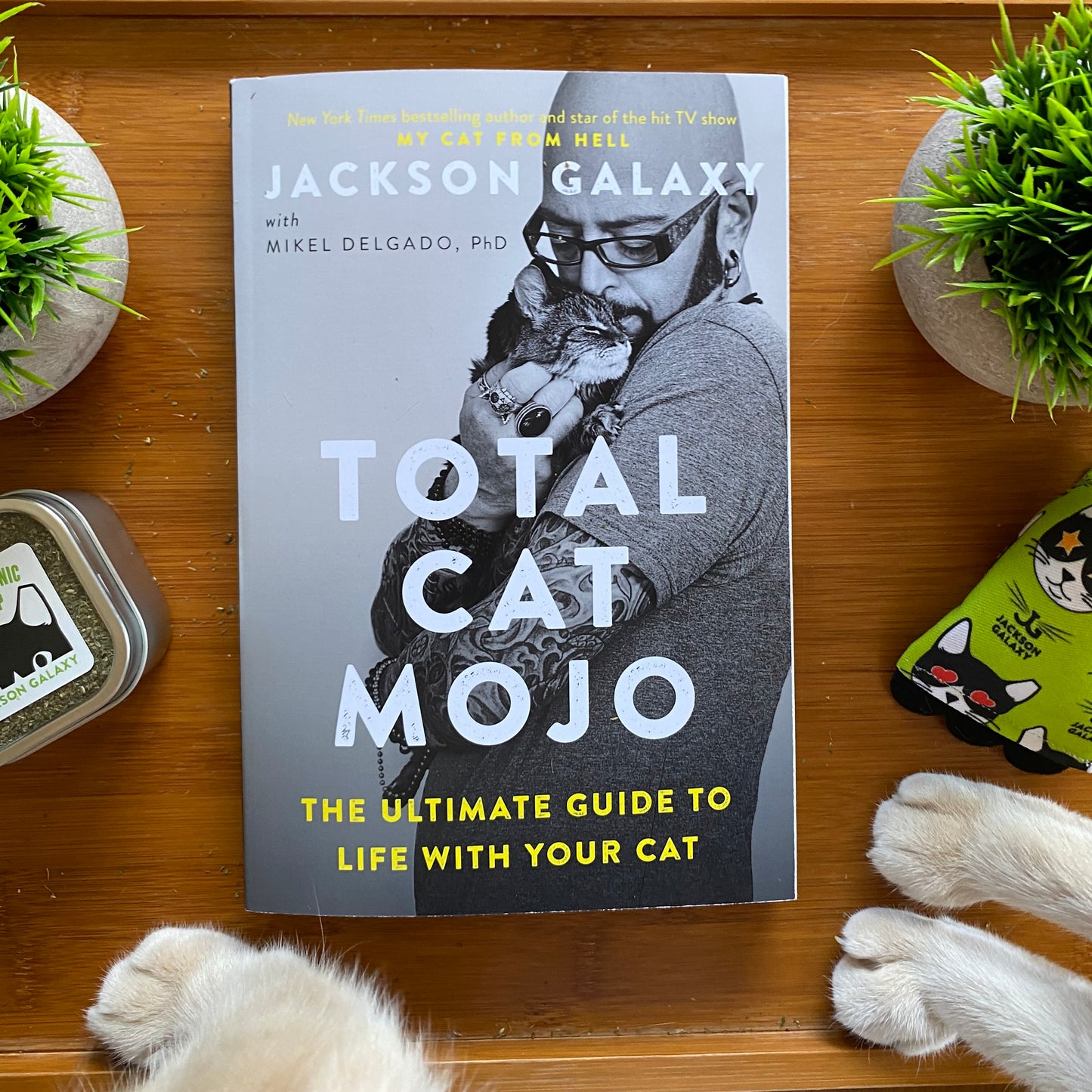
Galaxy, J., Delgado, M., and Rock, B. (2017). Total Cat Mojo: The Ultimate Guide to Life with Your Cat, pp. 29-35.
Berk, I., Jackson Galaxy team (2022). “Are Black Cats Bad Luck?” jacksongalaxy.com blog.
https://www.jacksongalaxy.com/blogs/news/are-black-cats-bad-luck
Galaxy, J. (2022). “Shocking Black Cat Myths & Superstitions Explained!” YouTube.
https://www.youtube.com/watch?v=8agv627atJQ
Galaxy, J. (2022). “Cats go from burned at the stake to breaking the internet! #shorts” YouTube.
https://www.youtube.com/watch?v=IDCthwK-IPg
Research and historical sources
Sheldon, N. (2018). “Thou Shalt not suffer a Cat to Live: Why Pope Gregory IX's Vox in Rama Implicated Cats in Devil Worship.” History Collection. https://historycollection.com/thou-shalt-not-suffer-a-cat-to-live-why-pope-greg
ory-ixs-vox-in-rama-implicated-cats-in-devil-worship/Best Friends Animal Society.
“Bad luck black cat myths debunked.”
https://bestfriends.org/stories/features/bad-luck-black-cat-myths-debunked
Billings Animal Family Hospital. “Black Cats: Myths, Facts, and Why They Deserve Love.”
https://www.billingsanimalfamilyhospital.com/services/blog/black-cats-myths-facts- and-why-they-deserve-love
Eizirik, E., Yuhki, N., Johnson, W.E., Menotti-Raymond, M., Hannah, S.S., and O'Brien, S.J. (2003). “Molecular
Genetics and Evolution of Melanism in the Cat Family.” Current Biology, 13(5), 448-453.
https://www.sciencedirect.com/science/article/pii/S0960982203001283
Von Muggenthaler, E. (2001). “The felid purr: A healing mechanism?” The Journal of the Acoustical Society of America, 110(5), 2666.
https://doi.org/10.1121/1.4777098
Qureshi, A.I., Memon, M.Z., Vazquez, G., and Suri, M.F.K. (2009). “Cat Ownership and the Risk of Fatal Cardiovascular Diseases. Results from the Second National Health and Nutrition Examination Study Mortality Follow-up Study.”
Journal of Vascular and Interventional Neurology, 2(1), 132-135.
https://pubmed.ncbi.nlm.nih.gov/22518240/
Kogan, L.R., Schoenfeld-Tacher, R., and Hellyer, P.W. (2013). “Cats in Animal Shelters: Exploring the Common Perception that Black Cats Take Longer to Adopt.” The Open Veterinary Science Journal, 7, 18-22.
https://benthamopen.com/contents/pdf/TOVSJ/TOVSJ-7-18.pdf
Jones, H.D., and Hart, C.L. (2020). “Black Cat Bias: Prevalence and Predictors.” Psychological Reports, 123(4), 1198-1206. https://journals.sagepub.com/doi/abs/10.1177/0033294119844982