






Let’s get one thing straight.
Harmony in your home?
It’s not luck. It’s not personality. And it’s definitely not “hoping they’ll just figure it out.”
It’s design.
And if you get this wrong from day one… you’re not just dealing with a little chaos.
You’re creating a relationship dynamic your animals may never recover from.
Step 1: Respect the Cat’s Superpower
Your cat is not a ground animal.
They’re vertical.
And the moment you start treating them like a dog—forcing them to live life at floor level—you’re already breaking harmony.
Catify your space.
Give them:
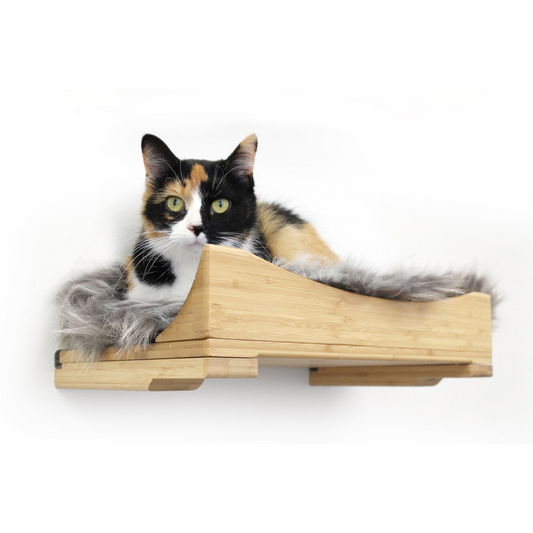
- Wall shelves
- Cat trees
- High perches
Why?
Because your cat is the only being in your home who doesn’t have to be terrestrial.
Use that.
When your cat can go up, they feel safe.
When they feel safe, they don’t react.
When they don’t react… everything else gets easier.
Step 2: Preparation Is Everything (Especially with Dogs)
Bringing a dog into a cat’s world without preparation?
That’s not optimism. That’s negligence.
You might trust what the shelter or previous owner says about the dog…
But you still need to verify it in your home.
Before introductions, ask yourself:
👉 Can this dog stay calm, focused, and under control?
👉 Can they exist in the same space without losing it?
If the answer isn’t a confident yes, you’re not ready yet.
Because it’s not fair to either animal to start off in conflict.
Step 3: Control the First Introduction (Or Pay for It Later)
First impressions don’t fade.
They stick—for life.
So when you introduce a dog to a cat:
- Keep the dog on a leash
- Control the environment
- Move slowly
If the dog lunges or runs?
You stop it. Immediately.
No drama. No chaos. Just calm, controlled correction.
Because what you’re doing in that moment is setting the tone for every interaction that follows.
Step 4: Never Skip the Scent Phase
Here’s where most people mess up.
They go straight to face-to-face introductions.
Big mistake.
Animals don’t recognize each other visually first—they recognize each other through scent.
So before they ever meet:
- Let them smell each other’s bedding
- Swap items between spaces
- Let curiosity build safely
Only then do you move to visual contact.
Not before.
Step 5: Kids + Cats = Supervision, Always
Let’s talk about what I call “Kid-zilla.”
Young kids don’t have:
- The motor skills
- The awareness
- The boundaries
To safely interact with cats on their own.
And to your cat?
That unpredictable movement doesn’t look cute.
It looks like a threat.
So if you want harmony:
- Supervise every interaction
- Teach gentle behavior
- Advocate for your cat’s space
Because your job is to make sure nobody feels hunted in their own home.
What Harmony Actually Looks Like
Let’s redefine this.
Harmony doesn’t mean:
- Cuddling
- Playing together
- Being best friends
Harmony means this:
👉 They can exist in the same room
👉 They feel safe
👉 Nobody is on edge
👉 Nobody is waiting for something to go wrong
The Bottom Line
If you take anything from this, take this:
You don’t force harmony. You create the conditions for it.
- Elevate your cat’s world
- Control your introductions
- Respect each species
- Move at their pace—not yours
Do that… And your home doesn’t just become peaceful.
It becomes balanced.