




You've spent the summer with a full, noisy house, and then one Tuesday morning in August, everyone leaves at once and
*crickets*
That may sound dramatic, but that’s how that shift feels for your cat family member. And if they were already on the anxious side of the spectrum, that abrupt quiet can tip the scales toward real emotional mayhem. We're talking litter box issues, destructive scratching, over-grooming, or near-constant vocalization when you're gone. Don’t fall into the trap of minimizing everything by thinking that your cat is just “acting out.” These are symptoms of anxiety, of your cat trying to re-scent and reclaim a territory that suddenly feels unfamiliar and insecure.
Understanding why that happens is the first step. Knowing what to do about it before the first school bell rings? Now we’re talking extra credit!
Why Routine Is the Foundation of Cat Mojo
Cats don't adjust to change the way humans do. The Raw Cat inside your companion has their own hard-wired body clock, programmed to the ancestral repetition of “Hunt/Catch/Kill/Eat/Groom/Sleep.” Predictable repetition of these rituals have benefit far beyond just securing food - it also results in a feeling of ownership over their territory, confidence I call “Cat Mojo.” Of course your house cat lives a very different life than their ancestors, but regardless, predictability in the day is still that source of mojo. So when that whole system collapses overnight because the family schedule experienced a dramatic shift, that confidence can collapse with it.
So what can you do? Come up with rituals to mark the day so that even when everyone leaves the home, what happens before you go and after you come home serve as bookmarks for the day, allowing both the Raw Cat and House Cat to relax. First and foremost, this is just one reason I strongly recommend feeding meals as opposed to just leaving food out. That way, your cat stays in sync with the energy spikes of the family. If you think about it, there are three of those major spikes every day for most households: when you wake up until you leave, when you come home and re-assemble for dinner, and then again when you get ready to go to bed. Feeding your cat around that schedule is a surefire way to boost Mojo from the standpoint of predictability, and communal family time (which, opposed to popular belief, IS important to cats!)
Beyond feeding, you can insert other rituals to help round out their sense of rhythm. In short, play is the way! There are other articles you can read from me about how to have the best interactive play sessions with your cats, but one sure bet is to center play on a Hunt/Catch/Kill/Eat (HCKE), ideally done with an interactive wand toy, both in the morning before everyone leaves and again in the evening when you're back. If you can’t do both, try your best to commit to at least one play session a day. For a cat, daily structured interactive play is a behavioral necessity, on the same level as the leash walk is for a dog. When you run a real HCKE session, moving the toy like actual prey and letting your cat complete the hunt, finishes satisfied and calm, and then is genuinely ready to rest while the house is empty. A cat who has hunted has earned her nap.
Another hint for when the inevitable happens - you leave the house! My biggest hint for you is to remember that your own anxiety about leaving, your sense of guilt for leaving them alone all day is going to make the actual event worse. Drawn-out goodbyes and guilty, soothing tones before you walk out the door don't comfort your cat. They don't parse your words, they catch your emotional pitch and your over-compensating tone tells them that something bad is coming. The most grounding thing you can do is establish a calm, consistent pre-departure ritual and stick to it. And then, just leave. In short, don’t just tell them that it’s not a big deal, actually make it no big deal!
Filling the Empty Hours
While you are gone, your cat will usually be doing one of two things: snoozing or looking out the window. To that end, do everything you can to make all of the windows in your home prime cat destinations.
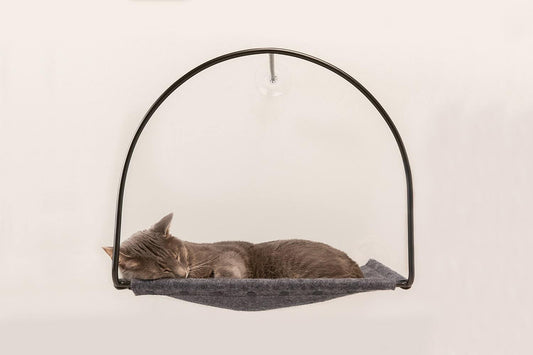
Window access matters more than most cat guardians realize. Moving a cat tree next to a window, or placing a bird feeder just outside, turns an empty afternoon into what I call Cat TV. The more windows you equip with bedding and a fun view, the more opportunities for napping in sunlight and different views of the neighborhood’s goings on.
Lately, and especially for those of you gone for long stretches of 10+ hours a day, and for cats that are very people-oriented, if your budget allows, a check-in from a cat sitter can bridge those gaps of absence, giving your cat genuine social contact (and a snack!) at the midpoint of the day.
Watching for the Signs That Something More Is Needed
Most cats adapt well when routine is consistent and the environment is enriched. But if you come home to repeated litter box avoidance, patches of over-groomed fur, or a neighbor telling you the vocalization doesn't stop the moment you leave, take those signals seriously. These are signs of real distress, and they deserve a real response.
Start with a vet visit. I recommend this first, every time, because medical issues can present as behavioral ones, and you want to rule that out before anything else. Beyond that, if the anxiety is severe enough that it calls for pharmaceutical intervention, your vet is of course the first stop for that.
The goal for August isn't a perfectly quiet cat or a house without challenges. The goal is a cat who, when you walk through the door after a long day, stretches on her perch, gives you a measured "hey, you're back" acknowledgment, and then wanders over for dinner. That's not indifference. That's Mojo.
Start building the routine before school begins, not after. Grab a wand toy and get the HCKE rhythm going this week, while you still have time to make it feel normal before the schedule changes around it.
Light, Love, and Mojo,
Jackson